Little & Often
Like all infants, puppies grow very rapidly (up to 20 times faster than an adult dog), and so require a specially formulated diet to aid their physical development. A high energy growth food is recommended and needs to be fed at evenly spaced intervals to avoid over stretching your puppy’s small stomach.
Meals should be split during the course of the day and ideally a young puppy should go approximately four hours between meals.
It is better not to leave food down (so throw away any uneaten food after 20 minutes) and not to change your puppy’s food regularly as this could cause havoc with its digestion and toilet training regime. Make sure that water is always available to your puppy, so never take its water bowl away.

Quantities
The quantity of food should be approximately the same for each meal. Young puppies, particularly those of a large or fast growing breed, can sometimes need more food as puppies than they require as adults. Increases of food should always be gradual and a good idea is to increase the amount on a weekly basis from 8 weeks until the puppy is 16 weeks old. Typically, by the time a puppy reaches 16 weeks, it will need roughly the same amount as when it is an adult.
Puppies can be greedy or picky with their food so it can sometimes be difficult to gauge how much to give them. Care should be taken not to over or underfeed your puppy. Puppies can often appear ‘chubby’, particularly after they have eaten, but under normal circumstances they should have a defined ‘waist’. If in any doubt about your puppy’s weight or diet, consult your vet when you next visit for a puppy check-up.

Platinum Feeding Guidelines
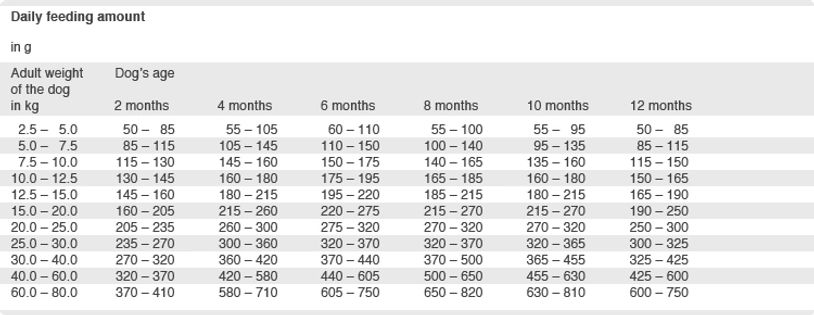
For specific advice on transferring your pup from puppy to adult food using Platinum Foods, please follow the following link which explains when and how to transfer your pup gently from puppy to adult feed once they reach 12 months of age.
Types of Diet
There are many varied feeding regimes to choose from: dry complete diets, semi-moist or pouch, tinned food (with or without biscuit mixer), raw food, and home-made food. Each food category has different qualities, and finding the right balance for your puppy is extremely important.
The most suitable diet should be easily digested and produce dark brown, firm, formed stools. If your puppy produces soft or light stools or has wind or diarrhoea, then the diet may not suit your puppy or it might have some kind of digestive problem or infection. If the condition persists for more than two days, consult your vet for advice.
Please remember that stability in the diet will help maintain good digestion. Any change in diet should be made very gradually over at least a week to avoid upset and you should try a new diet for at least 10 days before making any further changes.
Dry complete foods
There is a wide range of dry complete foods on the market and the quality varies widely. To get the best out of your puppy’s development choose a food specially designed for puppies.
Some puppies are not accustomed to complete dry foods immediately after weaning but will normally grow to like them with time. If your puppy does not seem to like eating dry complete and this is what you wish to feed, you can try soaking the food in a little warm water to soften it, or mix in a little tinned puppy food, gradually reducing the quantity until your puppy is fully weaned and accepts dry complete.
Semi-moist, pouch, tinned and frozen foods
As with complete dry foods, semi-moist, pouch, tinned and frozen foods can vary in quality. Again, choose a good quality diet which is easily digestible, nutritionally complete and does not require additional foods to be added to it. As before it is best to avoid changes in your puppy’s diet - so if you find a product that works for your puppy, stick to it.
Home-made food (raw fresh or frozen meat)
Before the advent of commercial dog foods, it was quite common to feed dogs’ raw or cooked fresh meat. Many people still consider that there is no substitute for feeding raw meat; these diets are sometimes referred to as BARF (bones and raw food diet). Just meat on its own however, is not enough, and dogs need other ingredients and supplements to maintain a completely balanced diet. Puppies in particular need a balanced and nutritious diet whilst they are growing up, as even a slight imbalance may harm their development and growth. Additionally, home-made foods obviously necessitate a fair degree of pre-planning and preparation. However, there are a number of manufacturers now providing pre-packaged complete BARF diets, which make the feeding regime easier to administer.

Treats
Giving treats is a good way to reward your dog during training and encourage the behaviour you want. There are a wide variety of prepared and natural treats on the market which vary hugely in quality. Some commercial treats have lots of sugar, colourings, milk products and fat in them, so always check the ingredients label. Good quality prepared treats have been developed with dogs dietary needs in mind.
However, all treats should be given sparingly, and never comprise more than 15% of your puppy’s total calorie intake. If you use treats regularly, reduce the amount of main meal food your dog is receiving in order to avoid obesity. Some chew treats have proven ability to help prevent dental diseases, but again check the label to ensure you are getting a genuine product.
Human chocolate is poisonous to dogs and can cause liver damage and even be fatal, so never give your dog any chocolate or leave any lying around where it might be found and eaten. Be especially careful at Christmas and Easter time.
Avoid giving your puppy any sweet biscuits or sugary treats which are bad for its teeth as well as its waistline, and can cause sugar ‘highs’ and ‘lows’.
Always remember that table scraps contain calories so they should be taken into account as part of the daily diet. Better still; don’t be tempted to feed table scraps at all.
Not all treats are made equal and we are big advocates of natural chews and treats. An easy method to incorporate as much training and treat work as you like into your day without worrying about the additional calories your dog is taking in is to Ditch The Bowl, this method of training reallocates the calories your dog would already be having from the daily meals into fun and rewarding activities that build up value for the concepts and skills you want and the bond between you and your dog.
None of our dogs have conventional food bowls and instead receive all their meals through games, chews, stuffed bones, stuffed toys and likimats.
An easy way to ensure the nutional value of the treats you give your dog is to ensure that they are complete diets. The treatie tubes we provide in your puppy pack are a brilliant way to turn a complete wet diet into a high value reward.

Recommended Complete Wet Diets for Treats
Platinum Menu Wet Diet
Platinum Menu Wet Diet
Platinum Menu Wet Diet

JR Pure Meat Paté
Platinum Menu Wet Diet
Platinum Menu Wet Diet

Lily's Kitchen
Platinum Menu Wet Diet
Lily's Kitchen

Crave
Lily's Kitchen

Pooch & Mutt
Natures Menu Superfood Range

Natures Menu Superfood Range
Natures Menu Superfood Range
Recommended Complete Dry Diets for Treats
Eden Semi Moist
Eden Semi Moist
Eden Semi Moist

Beco
Eden Semi Moist
Eden Semi Moist

However, sometimes we want to give our pets something a bit more special, perhaps for a new skill we are trying or a particularly difficult environment or concept. We very often turn to home made recipes and baking to create our own treats that we know exactly what went into them and how they were made. In the ebooks section of this page you can find a Susan Garrett Treats ebook which is packed full of easy and simple recipes that create wholesome and cheap alternatives to your regular off the shelf treats.
But, like everyone, we also do provide our dogs with shop bought treats on occasion and its important to ALWAYS go for the Natural high Protein.
We AVOID anything that is processed or contains less than 60% actual meat. We never buy anything that states on its packaging artificial flavours, “bulking agents” or “meat derivatives”. Instead always choose the product which specifies fresh meat in their recipe.
Salukis are not just momentously fussy eaters (they will turn their nose up at most cheap commercial dog biscuits) but also have very sensitive stomachs, possibly from eating at the tables of kings for generations. However, this does raise the importance of choosing healthy and nutritious treats for your Saluki, as often cheap bulked out treats will not only be spat out but can make them sick and give them diarea. We have learned this the hard way with our own Salukis and don’t want you to make the same mistakes.

Recommended Natural Treats
JR Pure Meat Sticks and Training Treats

Pet Treats Wholesale Sausage Range
Hollings Naturals Range
Hollings Naturals Range

Platinum Snack Range
Platinum Snack Range
Hollings Naturals Range

Eden Treats
Platinum Snack Range
Eden Treats

Chews
Chews are an important part of any dogs diet and enrichment. The act of chewing not only helps your pups through the painful stages of teething but also helps adult dogs to relax and promotes calmness, releasing endorphins and “happy chemicals” in the brain.
HOWEVER, once again not all chews are made equal and it is really important that you NEVER feed your dog Rawhide or Rawhide Products. Rawhide is a commonly available and cheap dog treat and chew and was for many years a go to with our dogs. However, it may surprise you to know that rawhide is actually a by product of the leather industry rather than the meat industry. It is treated with a concoction of harmful and potentially deadly chemicals and is left unregulated as it is not deemed a product of the food industry.
Rawhide is extremely likely to make your pup violently sick or give them severe diarrhoea it is much safer and healthier for your dog to go for the many different available natural options.
Our favourites include:
· Dried Ostrich Twists
· Raw and Dried Bones
· Hairy Rabbits Ears & Skins
· Hairy Cows Ears
· Pigs Ears
· Chicken, Duck or Goose Feet
· Chicken, Duck, or Turkey Necks
· Pig Snouts
· Venison Ears and Legs
· Paddy Wack
· Jerky
· Fish Skins
You can even get lots of stuffable options natural chews as well which work well for ditching the bowl. Our favourites of these include:
· Hooves
· Trachea
· Horns

Recommended Natural Chew Suppliers
Four Paws Dog Treats
Natural Pet Treats Wholesale

JR Pet Products
JR Pet Products
YouTube Videos

Health for all Pets - How Rawhide Chews are Made
A quick but important video exposing the reality of how rawhide chews are made.
Himalayan Dog Chew Recipe
A quick how to on creating your own Himalayan Cheese Chews for your dogs.
Rodney Habib- Awesome Attributes of Eggs in your Pets Diet
A great deep dive into the benefits of eggs and how they can add cheap easy vitamins to your dogs diet.
Blogs
Pet Sci - A Guide to Body Condition Scoring in Dogs
It is important to understand what a healthy and fit dog looks like and also what an over or underweight dog looks like to, this way you can monitor your dogs condition to ensure you are keeping them a healthy weight.